Hindi verbs are inflected with respect to

- gender of the subject (masculine, feminine),
- number of the subject (singular, plural),
- tense (present, past, future),
- action (perfect, imperfect, continuous),
- degree of respect (intimate, familiar, respect).
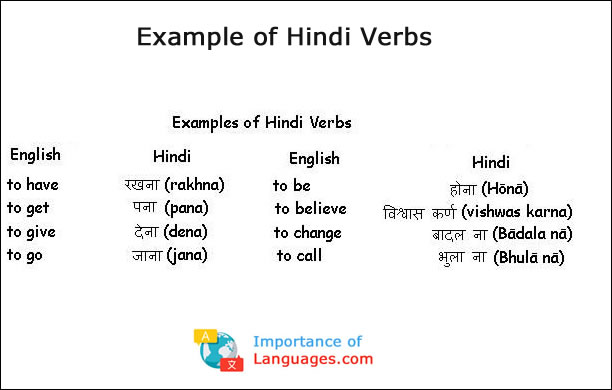
Verbs are referred to in their infinitive noun form which ends in na.
Examples:
bolna to speak
likhna to write
lena to take
ana to come
The stem of a verb is the infinitive form without the “ na” ending.
Examples:
bol , likh, le , a
*******
Nouns
Gender (Ling ) / Number (Vachan )Hindi has two genders, masculine (nouns ending in a) and feminine
(nouns ending in I ) but there are exceptions.
As for the number, we distinguish between singular (Ekvachan) and plural (Bahuvachan)
Case
There are two cases in Hindi, direct and indirect.
The indirect case is used when the noun is followed by a post-position, otherwise the
direct case is used.
Examples:
Masculine nouns on -a: larka = boy
Singular larka (direct) larke (indirect)
Plural larke(direct) larkon (indirect)
Feminine nouns on -i: larki = girl
Singular larki (direct) larki (indirect)
Plural larkiyan (direct) larkiyon (indirect)


No hay comentarios:
Publicar un comentario